FROM THE APPLE WORLD
In recent years, artificial intelligence has redefined how we use technology—not just for specific functions like search or translation, but as an integral part of the daily user experience. In this landscape, Apple introduced Apple Intelligence, an AI system deeply integrated into iOS, iPadOS, and macOS, with the ambition of making the Siri voice assistant smarter, more proactive, and more powerful.
However, the evolution of Apple Intelligence is no longer based solely on Apple's internally developed technologies. It now includes a disruptive element: the integration of Gemini, Google’s artificial intelligence model, into the so-called Foundation Models that serve as the "brain" for Apple AI's advanced features.
This strategic, multi-year agreement marks a significant turning point in the history of consumer AI and could redefine not only the future of Siri but the entire Apple Intelligence ecosystem for years to come.
Apple Intelligence: what it is and where we stand in 2026
Apple Intelligence is the umbrella term for the AI features integrated into Apple's latest operating systems. It is a suite of deep AI capabilities ranging from text generation to contextual understanding, including advanced functions such as reading and summarizing documents, creating visual content, and enhancing Siri.
Apple Intelligence is designed to maximize the potential of Apple Silicon chips and the Private Cloud Compute infrastructure. This allows it to handle operations requiring high computing power without exposing user data to unauthorized external servers.
Gemini: what it is and why it’s different
Google Gemini is a model that, in its most advanced versions, can reach over 1.2 trillion parameters—a scale that places it among the most powerful models on the market.
The real breakthrough in the Apple-Google partnership is Apple’s decision to utilize a customized version of Gemini to serve as the "engine" for its Foundation Models, designed to power future versions of Apple Intelligence and specifically the Siri assistant. This choice represents a departure from Apple's historical approach, which until now had focused on models developed entirey in-house and processed directly on-device or via its own cloud infrastructure.
The Apple-Google deal: an unprecedented partnership
According to various sources, including Bloomberg and international news outlets, Apple has finalized a multi-year agreement with Google to use Gemini-based technologies within its systems.
Excerpts from the agreement include:
"Apple and Google have entered into a multi-year collaboration under which the next generation of Apple Foundation Models will be based on Gemini models and Google cloud technology. These models will assist in the development of future Apple Intelligence features, including a more personalized version of Siri, arriving as early as this year."
Objectives of the agreement
The primary goal is to empower Siri and Apple Intelligence with language understanding capabilities far more advanced than what was previously available. Specifically, this agreement:
Enables the use of Gemini-based models as the bedrock for Apple Foundation Models.
Introduces technologies capable of performing complex tasks such as text synthesis, planning, and contextual explanations.
Maintains AI management on Apple’s private servers or on-device to uphold privacy standards without compromising user data.
Paves the way for a new, more personalized and high-performing Siri in 2026, thanks to the combination of Siri technology and the Gemini AI engine.
Why Apple chose Gemini
Apple evaluated alternative solutions, including models from OpenAI and Anthropic, but ultimately decided that Gemini provided the best foundation for building its proprietary models, balancing performance, scalability, and cost.
What is a Foundation Model and why does it matter
The term Foundation Model refers to broad, versatile AI models that serve as a base for building more complex, specific functions. Apple introduced Foundation Models into its AI infrastructure to enable features that go far beyond simple voice recognition, moving toward advanced semantic understanding and contextual content generation.
In practice, a Foundation Model acts as a central brain that understands, generates, translates, and interprets vast amounts of information. Apple’s evolutionary step was designing these models not just for on-device execution, but for handling complex tasks via the cloud. Integrating Gemini into these Foundation Models means this "artificial mind" will be significantly more powerful and adaptable than previous in-house solutions.
The balance between privacy and AI power
Privacy has always been one of Apple’s core differentiators. Even though Gemini is a Google model, Apple manages the implementation so that the model runs through Private Cloud Compute and is controlled by Apple’s systems.
This means:
User personal data is not sent to unauthorized external servers.
Apple maintains full control over how models are used within its ecosystem.
Processing and responses can be optimized for Apple users without compromising security.
This hybrid model—processing "on-device" and via a private cloud—is designed to merge user privacy with the sheer power of the Gemini model.
Implications for developers and apps
The introduction of Gemini models into Foundation Models won't just impact Siri. Developers will be able to leverage this new AI foundation through Apple frameworks like Core ML and App Intents to create smarter, more interactive apps.
Imagine applications that can:
Understand more complex natural language instructions.
Generate personalized responses.
Create multimodal content.
Provide proactive user assistance.
Automate tasks that currently require manual input.
This opening could significantly accelerate the adoption of advanced AI features in third-party apps, improving the overall experience across iPhone, iPad, Mac, and other Apple devices.
Real-world use cases: Apple Intelligence + Google Gemini
How will this integration change the user experience? Here are a few concrete examples:
Complex voice commands
With the new Siri, you can ask: "Organize a trip from Milan to Rome with stops for museums and vegan restaurants," and receive a detailed plan in natural language.
Real-time contextual references
While reading documents or emails, Siri can analyze the content and suggest replies, summaries, or directly relevant actions.
Proactive assistance
The system can learn from your habits and anticipate needs, such as suggesting reminders based on recent conversations or upcoming appointments.
Multimodal support
Thanks to Gemini’s capabilities, you can combine text, images, and voice commands naturally: "Show me photos from last night's dinner and create a short video with music."
The near future of Apple Intelligence
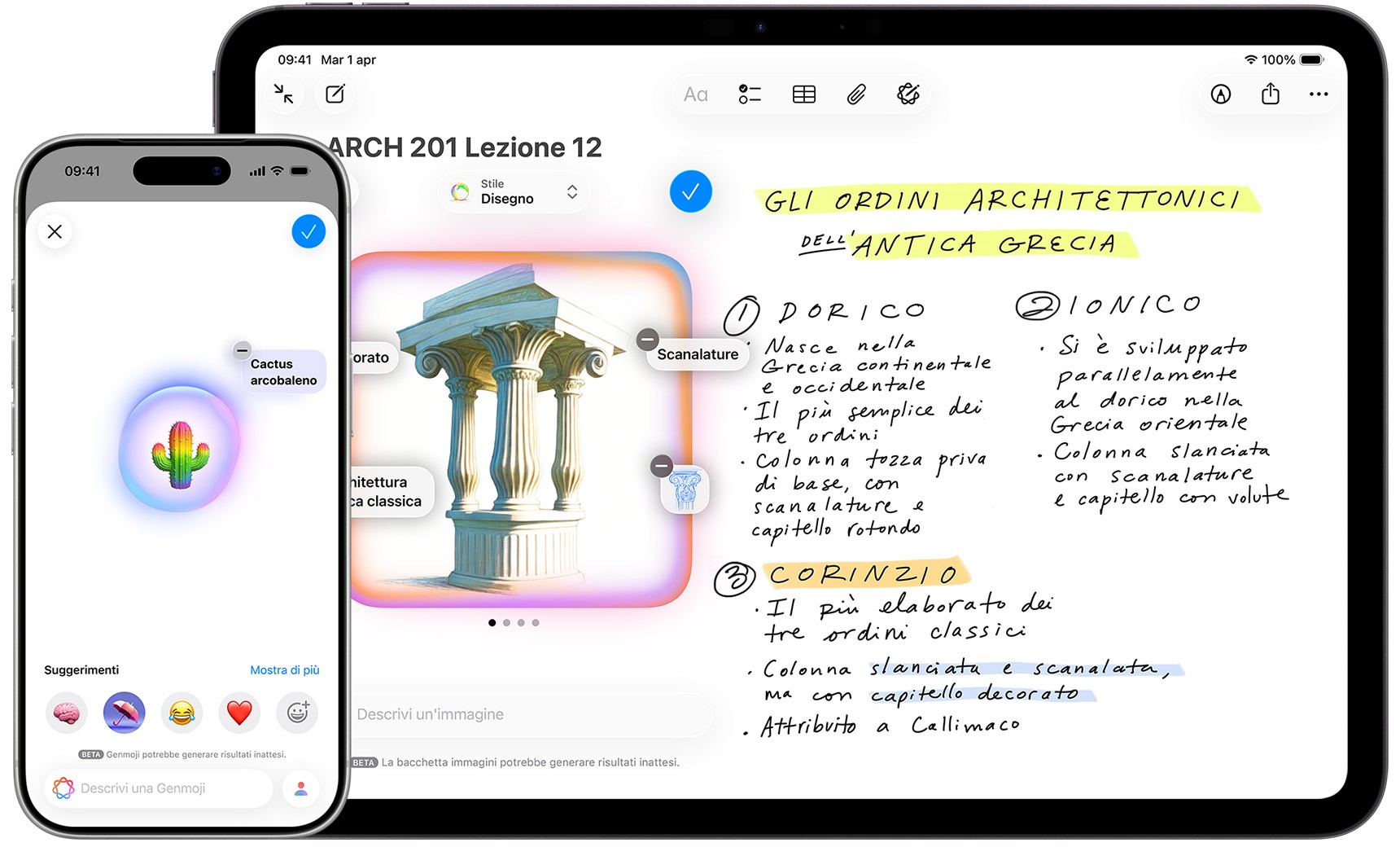
Beyond the prospects of the Gemini deal, Apple Intelligence already offers a wide array of useful features:
Smart summaries
Writing tools (assisted writing)
Image generation
Contextual translations
Creative features (e.g., Genmoji)
Native app integrations
Conclusion: redefining AI on iPhone and beyond
The agreement to bring Gemini into the Apple Intelligence platform represents one of the most important shifts in the recent history of consumer AI. By collaborating with Google on Gemini—an extremely advanced model—Apple is signaling a strategic paradigm shift to ensure Siri and Apple's AI features remain competitive.
The synergy between Gemini, Apple’s Foundation Models, and the security of Private Cloud Computer suggests that the Apple experience will become increasingly intelligent, fluid, and proactive.
While Apple Intelligence is already a powerful toolset today, tomorrow it could become a true "digital brain," revolutionizing how we interact with everything from the iPhone 17 to the M5 iPad Pro and MacBook Pro.